Dear Mr. Ackman:
I’m writing this publicly as an engaged retail investor and long-term observer of Pershing Square’s work who deeply respects your discipline, clarity of thought, and ability to steward exceptional consumer franchises through periods of structural change.
Your hallmark as an investor has never been simply identifying great companies, but recognizing when a business is mispriced relative to its long-term potential, and acting decisively to correct it. Chipotle $CMG is a prime example: transaction-driven comps, expanding restaurant-level margins, consistent throughput improvements, and more than 300 openings in 2024 alone speak to your activist approach succeeding on every operational metric. At a time when most fast-casual peers struggle with rising costs, Chipotle expanded margins by 50 bps, maintained 20-30% pricing advantages over competitors, and laid the foundation for international and daypart expansion.
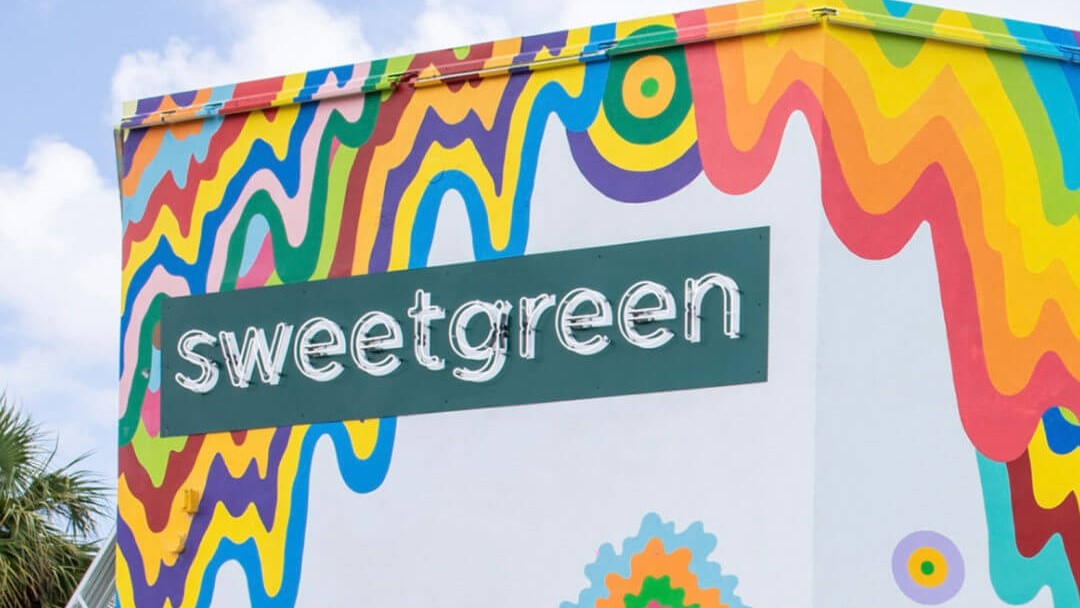
Sweetgreen $SG, by contrast, is experiencing the opposite trajectory. Their latest Q3 results reflect not a cyclical pause, but fundamental deterioration driven by formidable macro and structural headwinds.
- Revenue miss of nearly 4% with same-store sales down 9.5%
- Restaurant-level margins collapsing from 20.1% to 13.1%
- Adjusted EBITDA swinging from +$6.8M to -4.4M
- EPS miss of -$0.31 versus -$0.18 consensus
- Core customer cohort (ages 25-35) showing a 15% decline in discretionary spending
- Stock trading at a 52-week low of $6.74, down 76% from its IPO in 2021
In the Q3 earnings call, analysts repeatedly probed CEO and Founder Jonathan Neman whether the brand’s issues were temporary or structural. The Q3 print – one of the weakest since the IPO – suggests the latter. It’s also worth noting the company remains founder-controlled, with the three founders holding Class B shares representing 60% of the voting power.
As you are well aware, the current macro backdrop amplifies this fragility. Sweetgreen – perhaps more so than its fast-casual competitors – is directly exposed to:
- Persistent inflation and tariff-driven cost pressures
- A weakening labor market and disposable income erosion
- A consumer shift toward at-home meals
- Sociocultural changes in Gen-Z dining behavior (experiential formats like Tesla’s popular Santa Monica diner replacing routine fast-casual)
Each of these challenges is manageable alone. Together, they form a formidable, system-level stress that only scale, operational excellence, and disciplined throughput can fix.
And Chipotle is uniquely positioned to provide that fix.
Through Pershing Square’s proven activist approach – concentrated ownership, focus on high-quality growth companies, willingness to catalyze operating or strategic change when necessary – Sweetgreen presents a rare asymmetric opportunity with timely catalysts driven by macro and structural headwinds.
Chipotle’s strengths map almost perfectly onto Sweetgreen’s weaknesses:
- Chipotle has mastered supply chain, portion consistency, and cost structure. Sweetgreen is struggling with margin compression and sourcing inefficiencies.
- Chipotle generates transaction-driven comps and predictable cash flow. Sweetgreen is coping with negative comps and declining traffic.
- Chipotle’s simple menu and operational discipline yield industry-leading unit economics. Sweetgreen’s network of relationships with hundreds of local farmers is challenging to scale, and it’s complex menu cost structure makes profitability increasingly elusive.
- Chipotle has the team, equipment, and processes to scale. Sweetgreen’s aggressive growth plan (37 new openings this year) risk amplifying losses without operational gains.
And yet, the Sweetgreen brand is itself extraordinary – being NYC-based, you may recall how popular Sweetgreen was for financial professionals in Midtown, as one of a plethora of lunch options, from 2015 to around the start of Covid-19.
As someone who has been loyal customer since first eating there when I was working as an investor at J.P. Morgan’s 270 Park office in Midtown NYC, I still believe it is the single most recognizable health-conscious fast-casual brand for millennials on the East Cost and a rapidly growing brand recognition on the West Coast – especially in California (LA + SF).
But brand power without operational strength is not sustainable.
This is where a Chipotle-Sweetgreen merger becomes strategically compelling. It would:
- Restore margin discipline through Chipotle’s proven systems
- Strengthen sourcing logistics at national scale
- Reinforce the digital experience (leverage Sweetgreen’s best-in-class digital ordering IP stack)
- Accelerate Chipotle’s penetration into the premium health-conscious category
- Turn Sweetgreen’s stalled footprint into a second high-growth pillar for $CMG
- Create a unified fast-casual ecosystem spanning affordability and premium wellness – all under the stewardship of a team that has already executed one of the greatest restaurant turnarounds of the last generation.
In short, Sweetgreen is not a distressed asset – it appears to be a mismanaged growth asset with an exceptional brand, but bearing the weight of and increasingly fragile operating model. Under Chipotle’s umbrella and with perhaps your guidance to the board and executive leadership, Sweetgreen becomes a strategic accelerant that could revive Chipotle’s brand as well.
Having read many of your annual reports in detail, I understand Pershing Square’s investment philosophy emphasizes variant perception and asymmetric payoff structures. As you embark on your own public offering, demonstrating a continued ability to identify and steward such asymmetric opportunities – like the potential value gap in Sweetgreen – could serve as a powerful validation of the Pershing Square thesis for a new class of public investors.
Respectfully, I believe the time is right for Chipotle to consider engaging with Sweetgreen – whether through a strategic partnership, minority stake, or outright acquisition ($SG current market cap is $800M). I am also curious to hear the perspective of Daniel Loeb of Third Point, Carl Icahn of IEP, and Paul Singer of Elliott. The alternative is allowing a culturally iconic brand among millennials to slowly decay in the face of macro and structural pressures that it cannot out-scale alone.
Your leadership has repeatedly demonstrated that when a great brand meets world-class operational discipline and investment foresight, the result is transformational – for the portfolio company, its employees, their customers, and for shareholders.

 Jude Christensen
Leave a comment