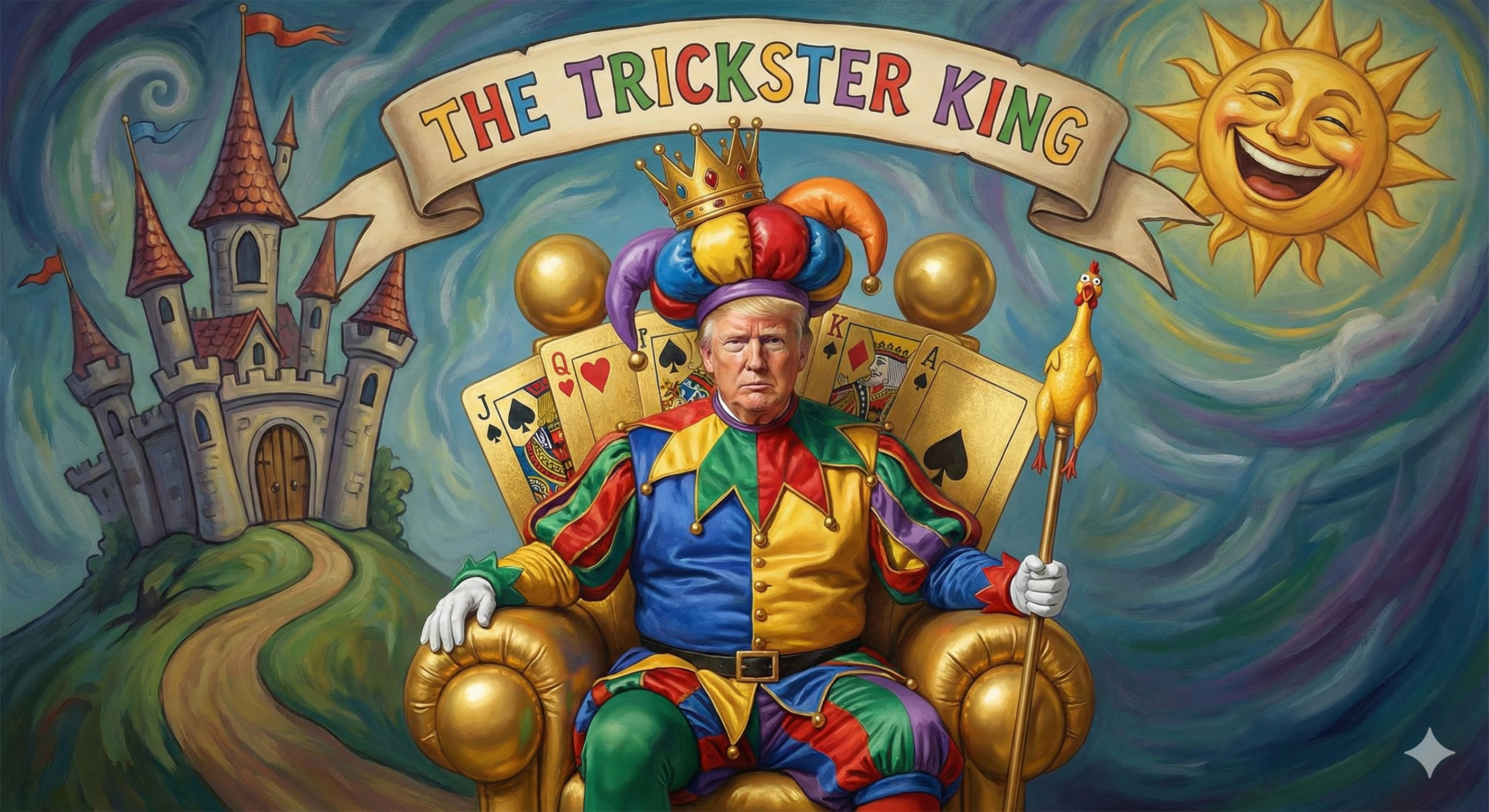
In Jungian psychology, the shadow refers to the unconscious, repressed aspects of the personality, including negative traits like anger and jealously to positive ones like ambition and creativity.
By incorporating Eastern philosophical ideas on the Self, Jung taught a Western audience that their own path to what Maslow calls self-actualization requires acknowledging and integrating their hidden shadow aspects into their waking consciousness.
One can apply Jung’s framework to American politics.
The shadow here is America’s hidden secrets that it has failed to acknowledge and integrate – the biggest one being that America is a country where many white Americans (and colored ethnicities to a lesser extent) are racists or bigots. It is crucial to understand that this “national shadow” is a collective phenomenon, distinct from the sum of individual shadows. It is an autonomous complex embedded in the nation’s storied history (Civil War over slavery, MLK civil rights), its founding myths, and its institutional structures, possessing its own energy and influence.
In this Jungian framework, Donald Trump is not just a politician or a billionaire who is using the public office for personal gains. Trump represents the archetype – a universal innate motif that spans human consciousness across time and space – of the Trickers and Tyrant King.
The Trickster is the archetypal character found across cultures known for being a mischievous and cunning figure who breaks rules and challenges social norms.
The Tyrant King is the archetypal character who is the dual, negative aspect of the King archetype – characterized by grandiose and tyrannical personality driven by a deep-seat sense of inadequacy and fear, which often stems from familial relationships during childhood.
The Jungian insight here is Trump is not the cancer of America, he is just the symptom and the revealer. From a Taoist perspective, this is the principle of observing the symptom to understand the underlying disharmony. A fever is not the disease, it is the body’s message that a disease is present – to hate the fever is to misunderstand the body. Trump is the nation’s high fever.
Jung would describe America as currently being in the stage of projection and polarization.
As Trump reveals the shadow to the delight of MAGA, Speaker of the House Mike Johnson and Senate Leader John Thune, he also infuriates democratic leaders like House Minority Leader Hakeem Jefferies, Senator Cory Booker, and California governor (and leading Democratic presidential candidate for 2028) Gavin Newsom.
On an individual basis, many white Americans are projecting the shadow onto racial minorities: anti-immigration, no SNAP or ACA healthcare for illegal residents and individuals (often colored) who they associate with crime, disorder and lawlessness.
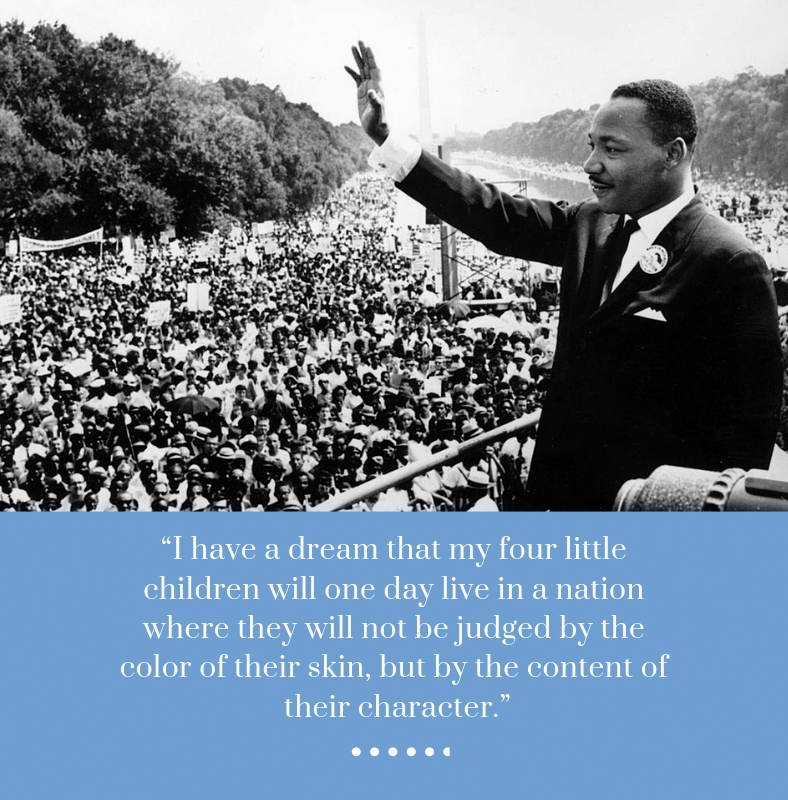
The Democrats are equally guilty. Many liberals project the entire racist shadow onto MAGA, as if racism lives only with people who Trump’s signature red hat. Racism exists everywhere, and often manifests in subconscious behavior in everyday life. A Democrat refusing to say “good morning” to an Asian man at a dog park, but welcomes with open conversation that of white man, is equally as guilty of racism as an overt MAGA supporter who chants racist remarks at African Americans. These are dual aspects (the yin and yang) of the same underlying disease.
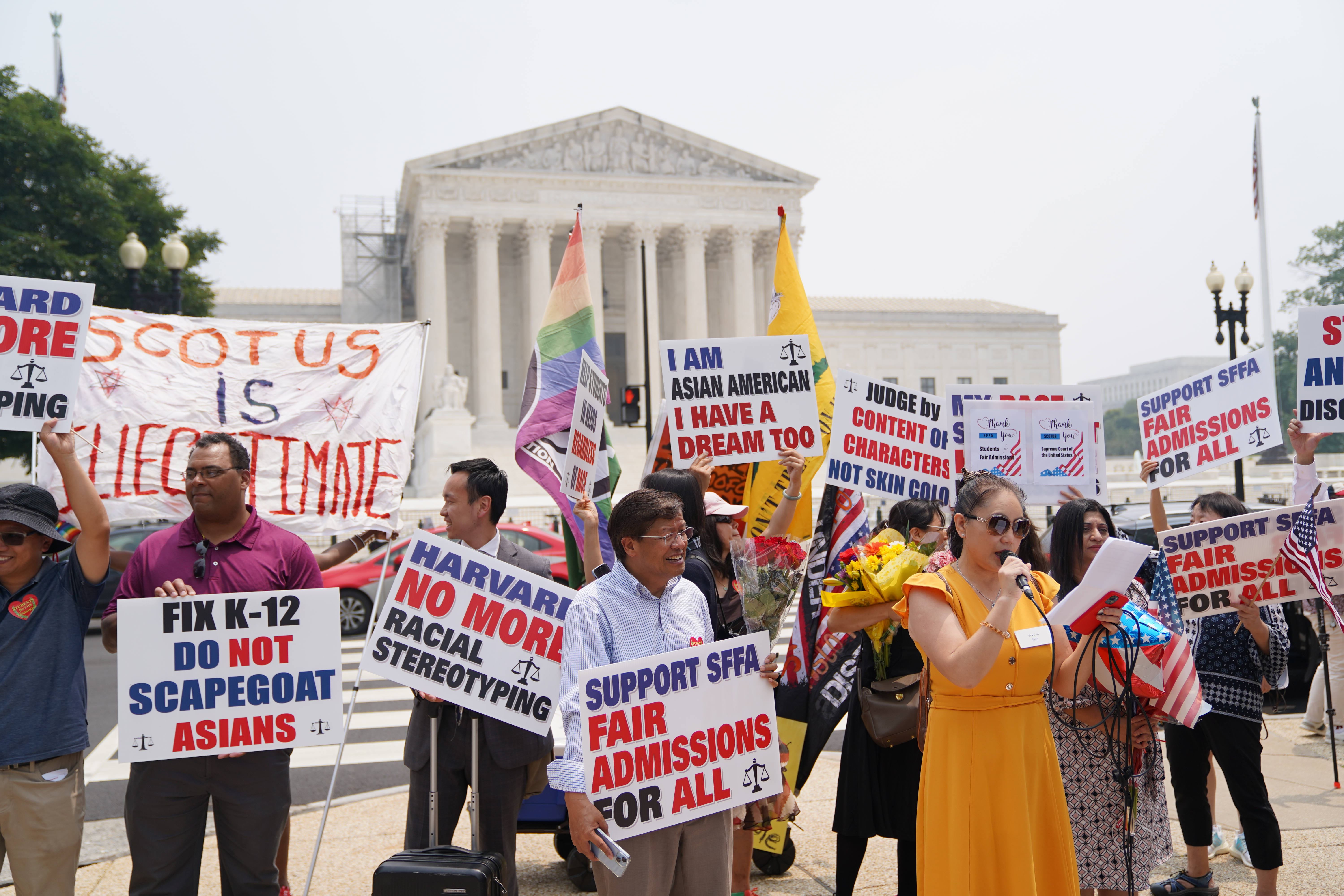
Conservatives often project authoritarianism only onto “the deep state” or “work liberals,” ignoring their own side’s comfort with strongman tactics.
If America is a patient and Jung her clinical psychologist, Jung would say that as each camp is certain the darkness is only “over there” – the undiscovered realization that “good” cannot exist without “evil” and vice versa – genuine integration is impossible.
This polarization is the fundamental, psychological reason our institutions feel paralyzed. People are fighting projections rather than facing the shared underlying wound that lies within America’s shadow.
According to Eastern sages, the process of self-actualization (which borrows from the Eastern idea of enlightenment) can be achieved through a 4-step process that Jung has also miraculously articulated (I believe he is a multigenerational genius beyond Einstein
1. Acknowledgement
First, there has be a honest recognition. This is an inward journey akin to repentance in Christianity. Grace comes first to a person who is sincere about their own failings and willingness to change. And only by an act of Grace can salvation be possible.
The leap of faith is the critical inflection point in one’s life when one truly acknowledge the moral failings in one’s life and how they have been inconsistent and disrespectful of the teachings of Jesus Christ. For most people, this rarely happens unless something life changing (a death, a prison sentence, a permanent disability) has happened for that individual. That is why you have so many inmates convert to Christianity during their prison time – they had to confront their anima and come to this difficult assessment.
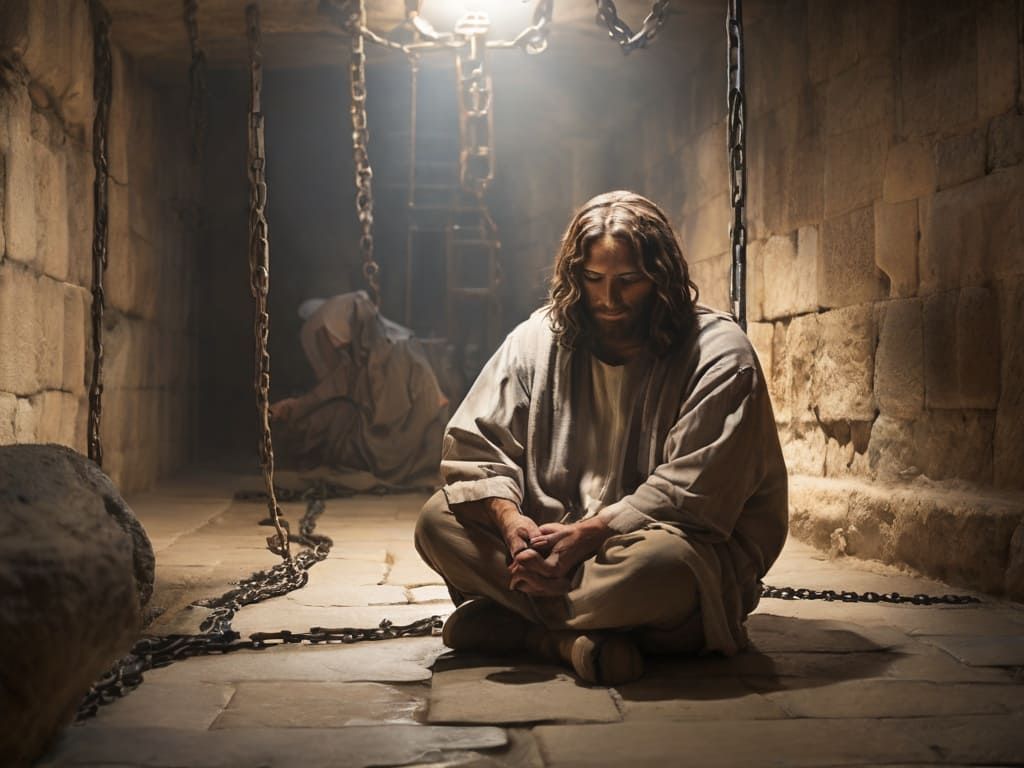
That is why so many transformations you see have emerged from truly devastating circumstances. You often see prison inmates convert to Christianity or even Islam during their sentence – they had to confront their dark animas, and come to the difficulty conclusion that there is a moral defect that needs correction (whether this realization comes as an act of Grace is beyond my understanding). Finally, this is also why many people who live comfortable lives regret their life – even if they were successful in business and were surrounded by wonderful friends and family – they realize they missed something they can’t quite capture until their very last moments. That is Grace.
2. Containment and Reform
This part is where I lack expertise and experience, but there are many politicians and strategists who can structure it optimally. This step involves ideas like:
- Stronger protections for voting and non-partisan election admin
- Rules that reduce incentives for racial gerrymandering
- Legal and structural limits on presidential powers (more expansive emergency powers not only for Congress but federal judges, strengthened independence of DOJ from executive branch, criminal penalties even for the president and his cabinet for defying court orders).
3. Transformation of Narrative
Germany is a good example of a country who is past the acknowledgement and containment/reform phase. Emerging from a Nazi-led post-WW2 regime, it founded itself painted as a country of white supremacists by the international community. To my delight, during my last visit of Berlin, Munich and Cologne, I found the locals incredibly hospitable. They were monuments of the Budda at Thai Sala in Munich and the Sanchi Gate of India in Berlin.
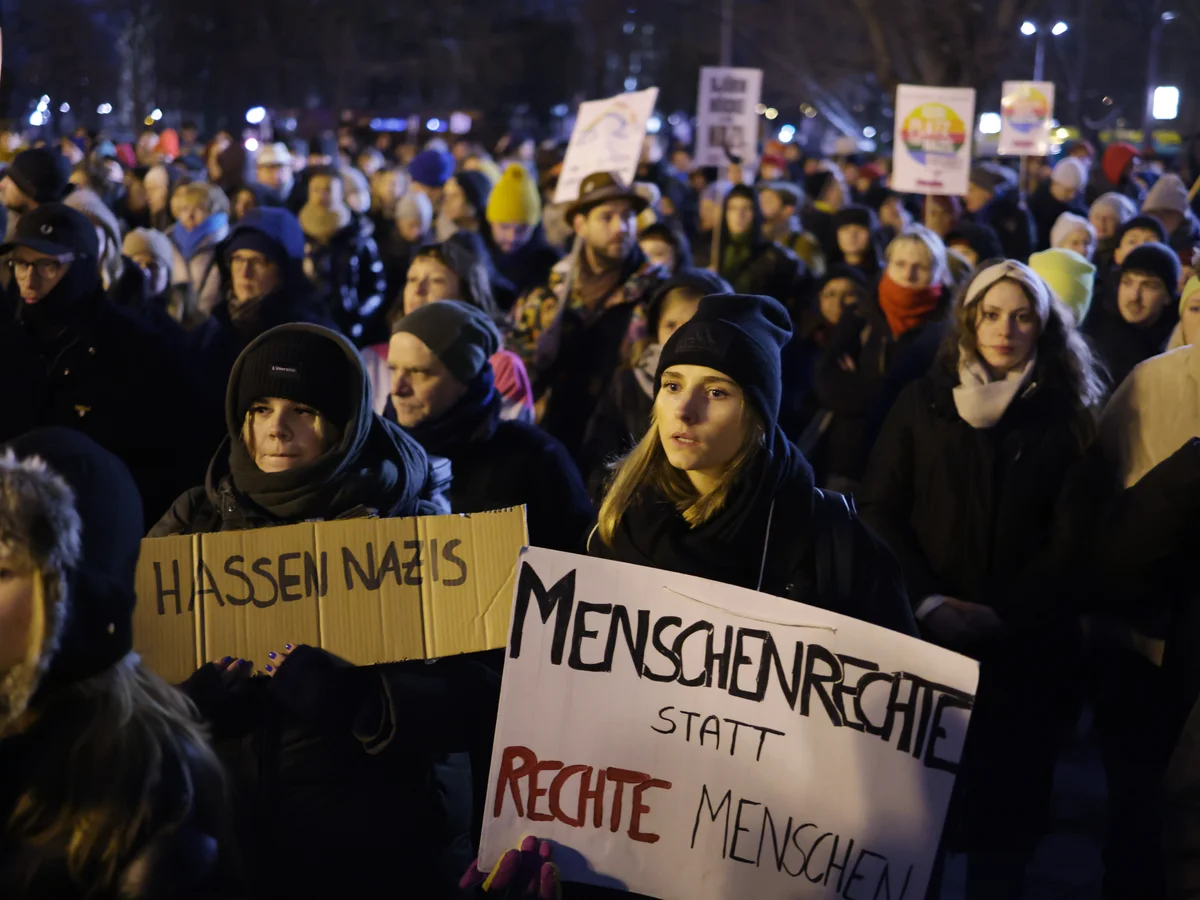
The reality is simple – Gen Z and millennials are becoming more educated about the global community and the history of depravity executed by individuals who led racists and fascists (yes, socialists too) regimes. A young, educated hip person don’t want to be associated with racists and bigots – especially when your country has a storied history on this issue (Germany). This is why the anti-Nazi anti-racism movement is so big among youths in Germany, but I digress.
4. Cultivating a New Ritual
Allow me to make a long digression into Taoism and the idea of yin and yang, as I believe this gets to the heart of developing a sustainable and lasting solution. In Chinese creation theory, the universe develops out of a primary chaos of primordial Qi, organized into the cycles of yin and yang, force and motion leading to form and matter. Yin (the goldendoodle) is the feminine energy of Qi, while yang (the tiger) is the masculine one.

In Eastern philosophy, a foundational idea known as duality drives much of the intellectual endeavors of a spiritual seeker. The two main ones relevant here from the Taoism (the “ritual path”) and Hinduism (“atma vichara” in Advaita Vedanta). Atma vichara is often popularized as “Who Am I?” (Ramana Maharishi) or self-enquiry (Ram Dass).
Here is a clear breakout of our Ego’s needs and its yang and yin manifestations:
| Ego’s Need | Yang Manifestion | Yin Manifestion |
| Separation | Pushing against, defining boundaries through opposition. “I am this, not that.” “My opinion vs your opinion.” | Blending with, accepting, merging. A much more fluid and porous sense of Self. |
| Control | Force, willpower, domination, an active shaping of the eternal world. “I will make this happen.” | Receptivity, allowance, patience, and following the natural flow. “I will let this unfold and respond appropriately.” |
| Permanence | Building, accumulating, and creating material structures (career, identity, possessions) that feel lasting, but are ephemeral. | Accepting impermanence, letting go, and being comfortable with flux and change. |
| Validation | Outward achievement, expansion, and being seen as successful, strong, and right. | Inner fulfillment, quiet contentment, and finding value in being rather doing. |
For an “un-integrated” or “un-actualized” person or society like America, the collective Ego often manifests in yang form and is driven by the prefrontal cortex – the logical reasoning aspect of our Self that must achieve a hedonic treadmill of emptiness.
The yin form is much less present in Western societies as it is in Eastern societies (Japan is an acutely yin culture). It is driven by the limbic system – responsible for your “gut feeling” – and aligns with the trending “mindfulness” movement in America, often motivated by taking a few expensive yoga classes.
Duality states that none of these can represent the “truth” – that true understanding only comes from following some ineffable Middle Way of both yin and yang. As the Western defect is generally a lack of yin practice, I will emphasize that here with respect to catalyzing the integration of America’s shadow.
The self-enquiry approach represents engaging with the yin form, while a Taoist-inspired approach (dubbed “rituals” by Michael Pruett in The Path) represents engaging with the yang form.
| Aspect | Ritual Path (the Yang) | Self-enquiry (the Yin) |
| Principle | “You Wei” (deliberate action) | Wu Wei (non-action) |
| Focus | The world of form and relationship. | The uncarved block (pu) – the formless source. |
| Process | Cultivating: conscious shaping; creating what can be. | Letting go: effortless abiding. Surrender to what is. |
| Virtue | Virtue / power (de) – skillful action in the world. | Emptiness (kong 空) / shunyata – from from attachment and realization of the Four Noble Truths. |
| Metaphor | The spokes that engage with the world and make the wheel useful. | The stillness / awareness at the center of the wheel. |
The dynamic dance of the Tao move fluidly between these two poles:
- You engage in the ritual (the yang) to purify the mind and calm the chaos. You sit for meditation, you practice loving kindness, you perform your duties with care. This is “You Wei” – conscious, deliberate action to create order from your inner fragmentation.
- You then rest in “Who Am I?” awareness (the yin) to avoid attachment to the ritual itself. After acting, you let go. You inquite, “who performed that ritual? who is this one seeking a purpose or meaning in life?” This is Wu Wei – dissolving back into the formless awareness so you don’t create a new, more spiritualized and intelligent Ego.
The “Who Am I?” path without the ritual can lead to passivity, dissociation, and what is pejoratively called “spiritual bypassing” – using the concept of emptiness / shunyata to avoid doing the messy, neccessary work of integrating one’s shadow and functioning the world.
The ritual path without the “Whom Am I?” awareness leads to spiritual materialism, rigidity, and a polished but ultimately confined Ego (the “perfected” person who is insufferable).
Americans are very good the walking the ritual path of the yang (common to many Western societies), but lack the knowledge or motivation to walk the awareness path of the yin. It is my humble opinion that this is the only true solution to integrating America’s anima to form a more “perfect union.”
So my Jungian perspective on Trump / America can be summarized as follows.
America cannot become what it imagines itself to be until it consciously integrates the hidden racial shadow that Trump has exposed. Only through that integration can the nation reach collective self-actualization. America’s suffering does not come from its failure to become its ideal, but from its violent refusal to be what it actually is. Integration is not about achieving a perfect, shadowless Self, but about the profound equanimity that arises when a nation, like an individual, finally accepts the terrifying and liberating truth of its own totality.
Jude Christensen
 Jude Christensen
Leave a comment