
I predict $NVDA will have major headwinds in 2026 and will lag $AMD and $AVGO.
Not only is the OpenAI / Nvidia complex being challenged by the $GOOGL TPU / ASIC complex, Nvidia faces an existential crisis in the Chinese market by a company called Moore Threads. Moore Threads IPOed today on the Shanghai exchange (with an incredible 400% pop), and I believe it still has plenty of momentum (with the founder and CEO of DeepSeek and Chinese hedge fund, High-FlyerLiang Wenfeng, loading up post-IPO).
I will not get into my long thesis on NVDA today (it’s the consensus core view), but rather why trimming $NVDA, if you have significant exposure, may be wise now.
Moore Threads is a China-copy of Nvidia
Moore Threads arose from a team of NVIDIA alumni executing the NVIDIA full-stack playbook, but with the mission of building a sovereign Chinese alternative – massively funded and protected by the state to ensure technological self-reliance.
Since starting operations in October 2020, they have built an impressive NVIDIA-copy:
- Flagship AI datacenter GPU: NVIDIA= Blackwell B200 (TSMC $TSM 4nm); Moore = MTT S4000 (SMIC is Chinese TSMC equivalent 12 nm)
- Consumer gaming GPU: NVIDIA = Blackwell 5090 (TSMC 4nm); Moore = MTT S880 (SMIC 12nm)
- AI Dev Ecosystem: NVIDIA= CUDA; Moore = MUSA with a critical machine learning software framework called PyTorch extended for their hardware (PyTorch MT)
China is betting on Moore Threads for AI Sovereignty
The naming of the GPUs by Nvidia and Moore Threads provide insight into their design and also intended customers. By naming each GPU architecture generation by heroic names in math and science (Blackwell, Ada, Rubin), NVIDIA is marketing for a general audience, including institutional investors (Wall Street equity analysts love sharing their sell-side “Blackwell insights” instead of “B200 insights”).
By keeping their names in a computer scientific taxonomy (first generation is 1, second is 2, etc.) and just having essentially the product code (S4000), this signals limited interest in gaining public demand.
This is strategic move to intended to develop:
- China AI Sovereignty: Moore Threads’ principle priority is likely to support the CCP’s goal of AI sovereignty – the main buyer and funding being government entities and state-owned enterprises. These buyers make procurement decisions based on sovereignty and supply chain security (these are primary drivers) – not on consumer-grade marketing buzz about whether the next architecture is “Einstein” or “Feynman.”
- Ecosystem over hype: another priority is likely to convince developers to adopt their MUSA software ecosystem. The focus is on the platform, not the silicon – naming the architecture might distract from their platform message.
- Efficient systems-level thinking: designing an AI datacenter (locally or distributed) will likely be automated in the future by an AI agent. AI doesn’t care if you name your product “Ada” or 4444 – in fact, AI just prefer just numbers. Yes, this a somewhat exaggerated and satirical point, but has some truth.
The founder and CEO James Zhang Jianzhong was instrumental in opening up NVIDIA’s market in China – eventually becoming the country GM. Zhang’s deep technical expertise, industry relationships, and insider understanding of the global GPU landscape gave Moore Threads more credibility with prominent investors like Sequoia and GGV Capital backing Zhang’s venture. With a “Chinese NVIDIA” of national importance, China is likely to retain homebred, exceptional chip talent while also convincing expats in the U.S. to move back home.
Paradoxical Truth
The variant perception (what I call a paradoxical truth): contrary to what Jensen Huang and other investors (even institutional) think, CUDA is no longer a durable moat. In fact, the GPU itself is becoming a commodity.
Anecdotally, when I was an undergrad in electrical engineering and computer science at U.C. Berkeley, I took a few grad-level courses in semiconductors and chip design (both analog and digital). I remember the top students (who have gone on to leadership roles in the semiconductor industry both in the U.S. and abroad) in those classes being predominantly Chinese.
I anticipate Moore Threads to become the NVIDIA-equivalent for China – precisely because it is government backed by the CCP (with Xi Jinping approval) that is resistant to Trump’s temper-tantrums over tariffs / export restrictions (which is nonsensical if you really think about it).
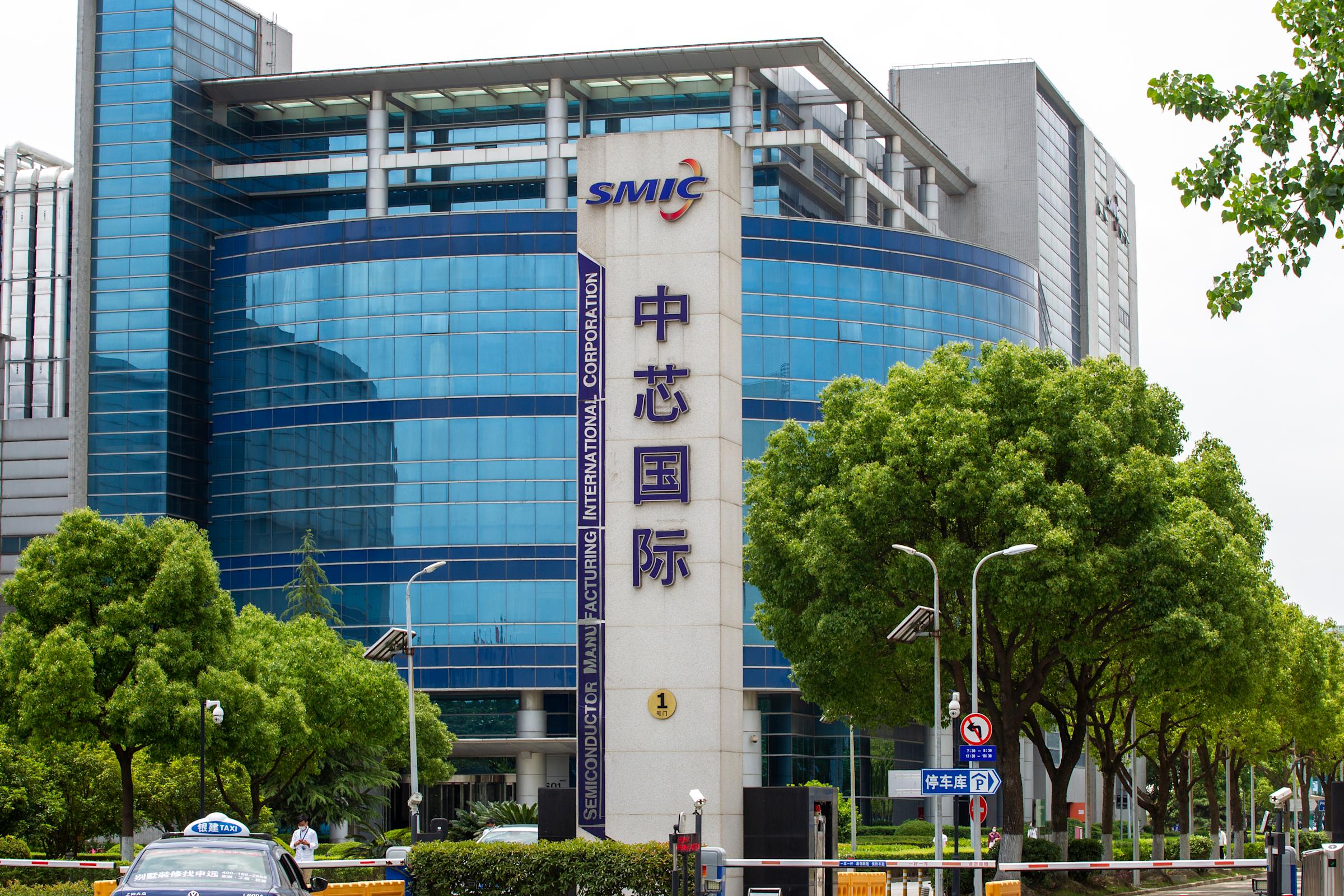
The other reality is TSMC is being replaced by SMIC (Semiconductor Manufacturing International Corporation) in China. Yes, SMIC is using older 12/14nm CMOS tech, but this is not a true technical barrier. The Chinese have the capital and talent to easily catch up with TSMC’s 4nm node – especially as this becomes a CMOS channel length limitation (sub-nm likely not plausible due to quantum tunneling).
Finally, remember the TAM we are dealing with: 18% of humanity is Chinese, and 60% is Asian. Yes, many of these countries are developing (Indonesia) or emerging (Vietnam) countries. But the beauty with AI is that it enables exponential technological growth with minimal capex. AI democratizes tech, and this democratization significantly decreases the ramp-up time to reach the frontier of tech for nations that are lagging behind.
Investment Implications
Trim $NVDA exposure – at least two major headwinds ( $GOOGL and Moore Threads) not fully priced in for 2026. Re-allocate capital to better risk/reward in $AMD or $AVGO.
If you have access to the Shanghai exchange, I think starting position of 5-10% in Moore Threads (688795) makes sense. I wouldn’t layer on convexity just yet – until we see a catalyst or sentiment shift away from NVIDIA in Asia (perhaps instigated by more erratic tariffs / export restrictions policies by Trump in 2026, which is probable).
There is really nothing Jensen Huang can do to prevent this secular shift in hyperscaler capex away from NVIDA – for example, their recent effort to lock-in more AI developers with their “CUDA Tile” into their software ecosystem is a temporary bandage for a wound they really cannot stop from hemorrhaging.
 Jude Christensen
Leave a comment