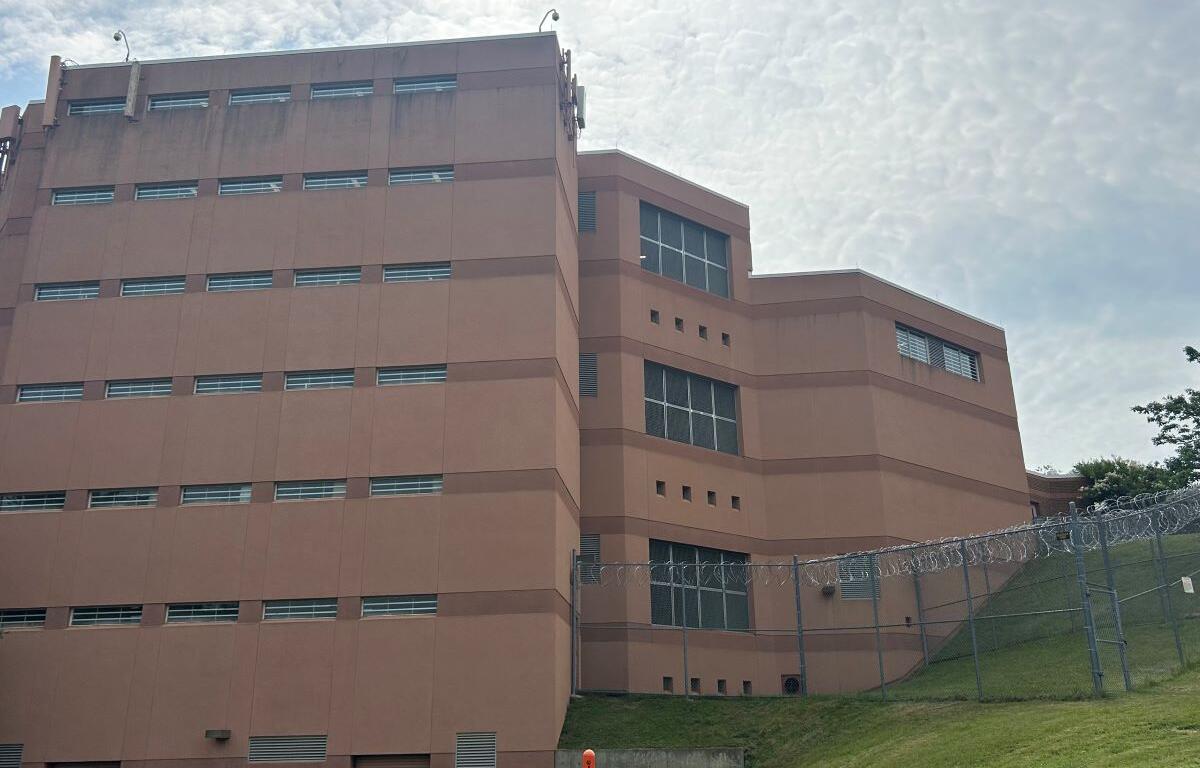
It was around midnight when the steel doors of the county jail swallowed me whole.
I walked into that fluorescent-lit purgatory with a clean record and a heart that had suddenly caught fire; a soaring, manic sun had risen within me, blinding me to the gravity of my situation. I didn’t know the charges, and in that feverish state, I didn’t care. Even the sight of the holding cell – the concrete slab for a bed, the unflushed toilet, and the literal filth of human desperation smeared on the ceiling – couldn’t dampen my spirits. I was vibrating on a different frequency, cracking jokes with the officers and finding a strange, distorted beauty in the faces of my fellow captives.
Because of the lingering shadows of the Covid-19 pandemic, I was moved into a two-week quarantine – a cavernous, two-story common area where twenty cells stared down at me like hollow eyes. I marched into that space in my new, striped black and white jumpsuit, feeling like a pilgrim rather than a prisoner. My cellmates were a young Hispanic man in his twenties and a white man in his forties; both carried a quiet, “chill” resonance that acted as an anchor for my chaos.
Every morning at 6:00 AM, before the lights even hummed to life, I would burst into a loud, soaring rendition of Avicii’s “Waiting for Love.” To the others, I was a nuisance, a manic ghost haunting their sleep. They met my karaoke with threats of physical violence, but I was wrapped in a veil of spiritual detachment so thick that their anger felt like rain sliding off silk. I wasn’t being brave; I was simply yielding to a manic ecstasy that didn’t belong in that decrepit space.
When the quarantine lifted, the descent deepened. I was moved to a long-term unit where the air was a thick soup of mold and rot. Ten of us shared a single, rust encrusted shower and a combo sink-toilet that seemed to weep with the weight of our collective misery. In my heightened manic state, I began to play a perverse game, teasing the other men and blurring the lines of their reality for my own amusement. The leader of this group – an African American man in his fifties with gray hair and tired, wise eyes – even called me the Devil. Looking back, it was a dangerous arrogance – a shadow dance that should have ended in blood. But perhaps they sensed the “crazy” in me, a wildness they mistook for a capacity for extreme violence, and so the blades stayed hidden.
Within those walls, Grace appeared in the form of a weekly university class. For one hour, I would leave the rot behind to sit with a local university professor and his twenty wide-eye philosophy students, and me enthusiastically explicating the intricate folds of Eastern philosophy with my weekly rifts spanning Hinduism, Buddhism, Taoism and Zen. Needless to say, the professor and students did find me odd – as many of the inmates where discussing about their street life, while this wide-eyed crazed looking invididual was discussing about “wu wei” and the “beginner’s mind.” In between my spiritual preaching, I found a rhythmic peace in writing poetry that felt like a bridge back to my soul, and realizing the profound necessity of rehabilitation for all prisoners – the idea that even a “ruined life” can be compost for something new.
My “road of trials” eventually led to the abyss. My antics – waking the unit at 5:00 AM to chant Hindu mantras – finally pushed a white supremacist cellmate to the edge. He promised I would be stabbed while I slept that evening, a sentence whispered through the bars. The guards moved me to a “special unit” for my own safety – a solitary, dank row of cells where the silence was so heavy it felt physical. You could only sit, eat, exercise on the cold floor, or use the toilet.
Yet, even at this abyss, the Yin energy of receptivity took over. My neighbor was an African American man who had found his peace in Islam. Through the wall, he shared the Quran with me. I began to digest the words of Muhammad, lecturing anyone including the correction officers who would listen on the Aqidah – to my surprise, many of them found comfort in the core beliefs of Islamic thought (yet I never told them of its origin). Simultaneously, I felt a soft, persistent knocking on the door of my heart from Jesus Christ. In that solitary dark, I developed a relationship with Christ that transcended the Gospel – a quiet, compassionate Self awareness that offered a different kind of light.
For my final month, I was moved to a unit of local men, many of whom were facing the ultimate shadow: charges of murder without the possibility of parole. They didn’t claim innocence; instead, they lived in a raw state of either self-defense, deep remorse, or a quiet, holy acceptance. Contrary to every stereotype, they were some of the kindest souls I have ever encountered. We spent hours in a communal flow, playing checkers and watching Jeopardy or Monk, finding life in the smallest, most mundane moments. One of them – a 7-foot Mexican gang member with tattoos all over body – introduced me to the I Ching, which has transformed my approach to life.
On the day of my release, I realized that while I was Beautifully Ruined, my cellmates were, too – that amidst the depravity of our circumstance, we shared something common and perhaps universal. Before leaving, I gave away everything I had, which was just the commissary food of ramen noodles I had accumulated as a form of currency – shaking their hands with a respect that went deeper than words. I respected them for moving past the “Yang” of denial and into the “Yin” of facing reality. As I walked out, I knew my own journey of integration had only begun. I wasn’t just leaving a jail; I was leaving the old version of my Self in those halls, finally humble enough to begin the inner work of reconstruction.
 Jude Christensen
Leave a comment