
As you should be well informed by now if you read my earlier pieces on The Myth of AI Photonics and The Myth of AI Quantum Computing, there are many opportunists who are trying to latch onto the AI infra investment band wagon.
It was not surprising to me when Elon Musk recently started promoting SpaceX has opening up a new market for “space-based data centers” or SBDCs. Musk has famously predicted FSD for many years for Tesla – hyping Robotaxi and his “SOTA self-driving platform” (when Waymo is way ahead) is still only at Level 2 autonomy – a remote distance of Level 5 full automation or Musk’s FSD failed promise.
Well seeing as how only 3% of $TSLA $1.5 trillion-dollar market cap is actually selling automobiles (according to Wall Street analysts), how do you make up for the growth of the remaining 97% (which is also close to $1.5 trillion in discounted cashflows)?
Having also chased the robotics hype with Optimus, Musk is setting to expand $TSLA valuation to extra-orbital valuations by suggesting he may be building infrastructure for SBDCs – incredibly timely given that he plans to IPO SpaceX in 2026 and its latest valuation is already close to a staggering $1 trillion ($800B).
Alas, just like FSD, Musk’s promise here is based on fiction rather than reality.
1. Kessler Syndrome
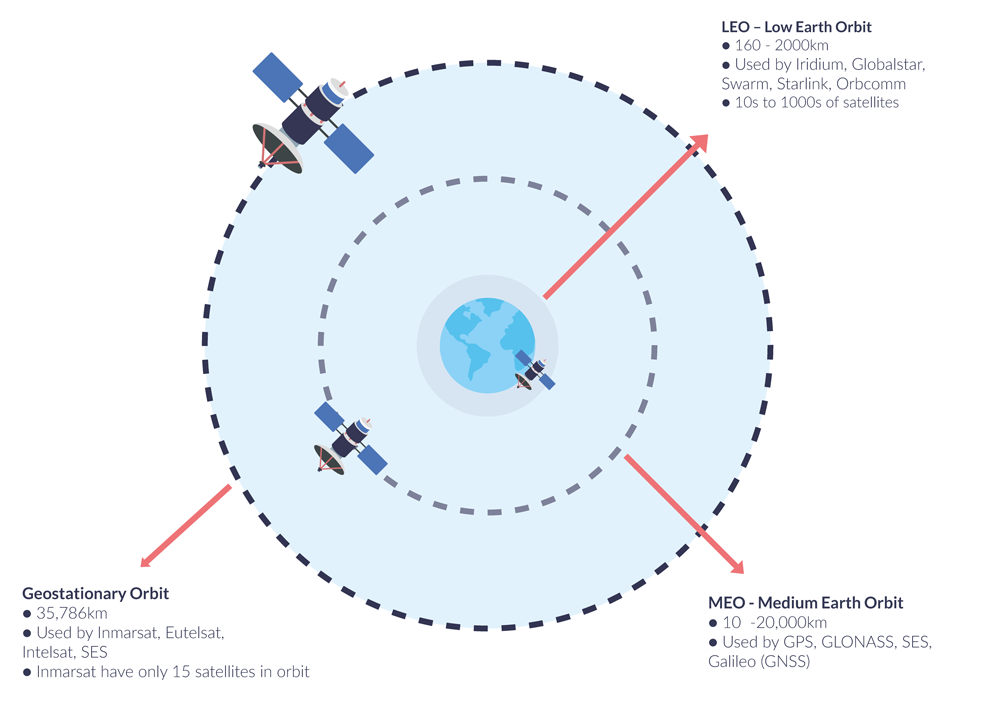
The Kessler Syndrome describes how a single impact can create millions of small/microscopic debris that can lead to a cascading, catastrophic wipeout of satellites in LEOs (low-earth orbital).
Orbits are divided into LEOs (160-2,000 km), MEOs (medium-earth orbits, 2,000 – 38,786 km) and geostationary (35,876 km). SpaceX’s Starlink and SBDCs will likely reside in what is already the most trafficked (94% of all satellites) orbit.
By adding thousands of SBDCs into LEO, a Kessler event is almost guaranteed eventually.
Mathematical Basis: the probability of a collision Pc over a time interval t is governed by the Poisson distribution (discrete, independent events):

= spatial density of objects (number of objects per unit volume).
= collision cross-section (total area of the two colliding objects).
- vrel = relative velocity between objects.
The exponent term represents the number of mean free paths before a collision. The governing dynamics:

- D is the decay due to atmospheric drag (debris being removed).
- L is the launch rate and represents the steady-state addition of new satellites and deployment-related debris.
- Pexplosion is the percentage of satellite explosions due to say battery ruptures.
- Pcollision =
is the Kessler contribution and is amplified the density squared (
) and the fragment yield
(fragments created per collision).
The Kessler Syndrome starts when Pcollision > D. Once this threshold is crossed, the population N will grow exponentially even if L (the launch rate) is reduced to zero. This creates a “runaway” environment where space becomes unusable for generations.
2. Thermal Management
On Earth, we use convection (fans) or conduction (liquid cooling $VRT) to cool datacenters (DCs). In the vacuum of space, convection is non-existent.
The only way then to shed heat from SBDCs in space is through thermal radiation. To dissipate just 100kW of heat (a modest AI GPU rack by $SMCI), you would need almost 300 sq meters of radiator panels or about a massive panel the size of 55ft by 55ft.

These large radiator panels will dramatically increased the likelihood of triggering a Kessler Syndrome. Now imagine having thousands of these panels flying at 18,000 mph in what is arguably a landmine – it is a catastrophe waiting to happen.
Mathematical Basis: in this proof, I show that the radiative surface area (Arad = 
1. The governing thermodynamic equation
On Earth, heat dissipation is volumetric (convective), but in the vacuum of space, heat dissipation is strictly superficial (radiation). The steady-state energy balance for a SBDC is defined by the following differential equation:

where 
2. Radiative dissipation limit (the Stefan-Boltzmann constraint)
The cooling power of the radiator is governed by the Stefan-Boltzmann law. However, unlike the basic form, a rigorous proof must account for the “view factor” (F) and the “effective sink temperature” (Tsink).

)
: emissivity of the radiator coating (
for high-end aerospace materials).
: Surface temperature of the radiator. This is strictly bounded by the junction temperature of the silicon chips (
or
). Allowing for thermal resistance (
), the radiator surface cannot realistically exceed
(
) without thermal throttling an $NVDA or $AMD GPU.
3. Incorporating the parasitic loads
A rigorous proof cannot assume 
- Direct solar flux (JS):
- Earth albedo (JA): sunlight reflected off Earth
- Earth infrared radiation (JE): thermal emission from Earth


If the radiator is not perfectly oriented (edge-on to sun), it absorbs heat.

Where 


4. Solving for the cross-sectional area
With the building blocks in place (governing dynamics, Stefan-Boltzmann limit, parasitic loads), let us now solve for the radiative area (Arad) required to dissipate a single SBDC with Pload = 100 kW.
Assuming an optimized orientation (to minimize the parasitic solar load) and a conservative radiator temperature of 


Which gives our final result for the minimum SBDC radiator area:

This cross-sectional area is equal to sigma in our Kessler equation:
With an SBDC main body or bus area at 
In plain English, what we have shown is that if Elon Musk claims are true, by building out a SBDC infrastructure, we would effectively have thousands of giant space sails that are ideal candidates for triggering a catastrophic cascade of collisions (the Kessler syndrome) that would make space unusable for generations.
3. CMOS Degradation
CMOS or Complementary Metal–Oxide–Semiconductor is the underlying tech underpins modern-day electronics – a device known as a transistor. Due to advances in semiconductor engineering / chemistry, a structure known as FinFET has allowed transistors to be scaled (their channel gate length) close to atomic levels (0.1-0.5 nm).

However, with the latest chip nodes at $NVDA and $AMD on the order 3-5nm, we are rapidly approaching a fundamental limitation. Due to quantum tunnelling, when the channel gate length approaches atomic levels, there is an exponentially higher probability that the transistor malfunctions due to leakage current. This physical limitation is the root cause of the slowdown in Moore’s Law in the past decade.

In the harsh environment of space where radiation from high-energy cosmic rays bombard these transistors constantly, the issue becomes even worse.
1. Permanent erosion (TID)
The foundation of the transistor failure starts with the total ionizing dose (TID). As cosmic rays strike the insulating layers of a CMOS or FinFET transistor, they create a buildup of trapped positive charges (


2. Thinning shield (Qcrit)
This shift in 

3. Exponential error spike (Nerrors)
As

The chip is now a “larger” target for the constant flux (


The CMOS degradation can be concisely summarized as:

While software can be patched remotely, the CMOS degradation will render GPUs inoperable, making them incapable of preforming reliable calculations for AI training and inferencing – turning an expensive SBDC into a high-speed “hallucinating” space junk, now literally a landmine to trigger another Kessler syndrome.
Additional Constraints
Here are 4 more issues – each by itself is monumental from an engineering perspective to overcome. All of these issues make solving the viability of SBDCs even more challenging than building a useable quantum computer or sustainable nuclear fusion.
- Launch cost: SpaceX’s current payload quote is $1,500-3,000/kg.
- Eclipse problem: LEO satellites orbit the earth every 90 minutes, and for 35 minutes in the shadow – how do keep these for running for say AI training without significantly reducing your duty cycle?
- Data gravity: how do you move petabytes of data from Earth to Space economically?
- Repairability: if a memory module fails or cooling pump leaks, who is going to fix it?
Investment Implications
Look, I am not an aerospace engineer, astrophysicist, astronaut, or semiconductor engineer, so you may take my perspective here with a grain of salt. I am just providing the underlying mathematics and physics of why SBDCs are not realistic today.
That said, shorting in general is much more challenging then being long – timing plays a bigger role more often than not than just getting the price direction right. I would advise against shorting $TSLA or SpaceX until we see market sentiment shift (maybe with the 200D SMA breaking). Another catalyst may start with a Democratic sweep of the midterms, which will signal a much more challenging political environment for Elon Musk to get preferential treatments for government contracts under the Trump admin.
In the meantime, I’d stay clear of anyone marketing a space-based data center.
 Jude Christensen
Leave a comment