
Paradoxical Truth: The prevailing assumption is that AI scaling requires more computation. We believe the opposite may increasingly be true. As AI expands across distributed networks of datacenters, communication becomes the primary constraint on performance. Advances in computation are paradoxically making communication the scarcer resource, forcing a transition from electrical to optical infrastructure.
AI is Becoming a Distributed System
Modern AI systems are built upon CMOS-based GPUs whose performance gains have historically been driven by transistor scaling. While improvements continue, the rate of scaling has slowed materially, forcing the industry to increasingly pursue performance through parallelism rather than faster individual processors. The result is that frontier AI models are no longer trained on single GPUs or servers, but across vast clusters of interconnected accelerators operating as a unified computational system.
Interestingly, in NVIDIA’s latest architecture (Blackwell), NVIDIA extracted a substantial generational improvement while remaining on essentially the same 4nm FinFET node used by Hopper, the prior generation. In contrast to prior eras where performance gains were largely driven by transistor scaling, Blackwell’s improvements were primarily architectural and packaging-driven, including CoWoS, chiplets, and HBM integration. As process-driven scaling slows, performance increasingly comes from connecting larger numbers of accelerators into a unified computational system rather than simply building faster individual processors.
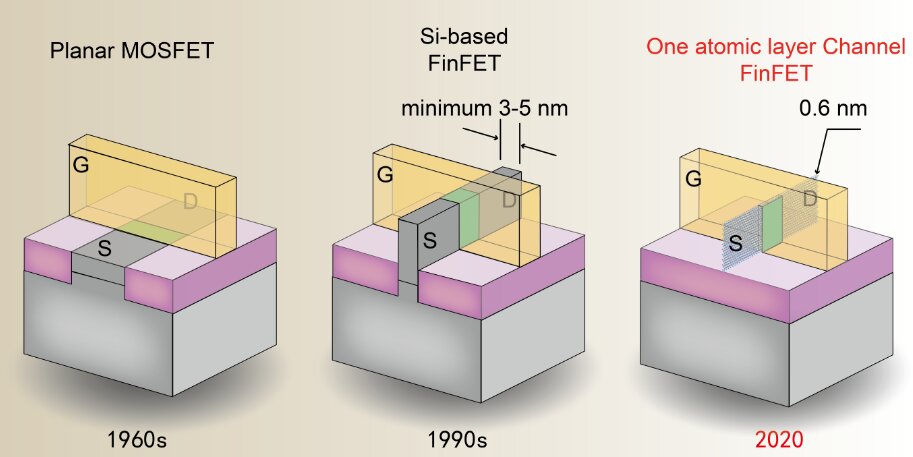
This distributed AI computing trend is likely to continue. The exponential growth in AI demand is colliding with practical constraints surrounding power generation, cooling infrastructure, electrical transmission, permitting, and land availability. At sufficient scale, these constraints make it increasingly difficult to concentrate compute within a single facility. We believe future gains in AI performance will increasingly depend on distributing computation across larger networks of accelerators and datacenters connected through high-bandwidth communication infrastructure, transforming AI from a centralized problem into a distributed one.
Distributed Intelligence Requires Distributed Communication
The transition from centralized to distributed computing fundamentally changes the nature of the AI bottleneck. When computation is localized, communication costs are relatively small compared to computational costs. As systems become distributed, however, increasing amounts of information must be exchanged between processors, clusters, and datacenters. Training requires synchronization, inference requires state transfer, and resource allocation requires coordination.
The hyperscalers are already positioning for this transition. Microsoft recently raised capital expenditure guidance to approximately $190 billion, with a substantial portion allocated not only to GPUs but also to datacenter infrastructure. SemiAnalysis recently analyzed a hypothetical 5GW AI cluster architecture distributed across Texas, Arizona, and Wisconsin. The design illustrates the scale of communication infrastructure required to coordinate hundreds of thousands of accelerators operating as a unified computational system.
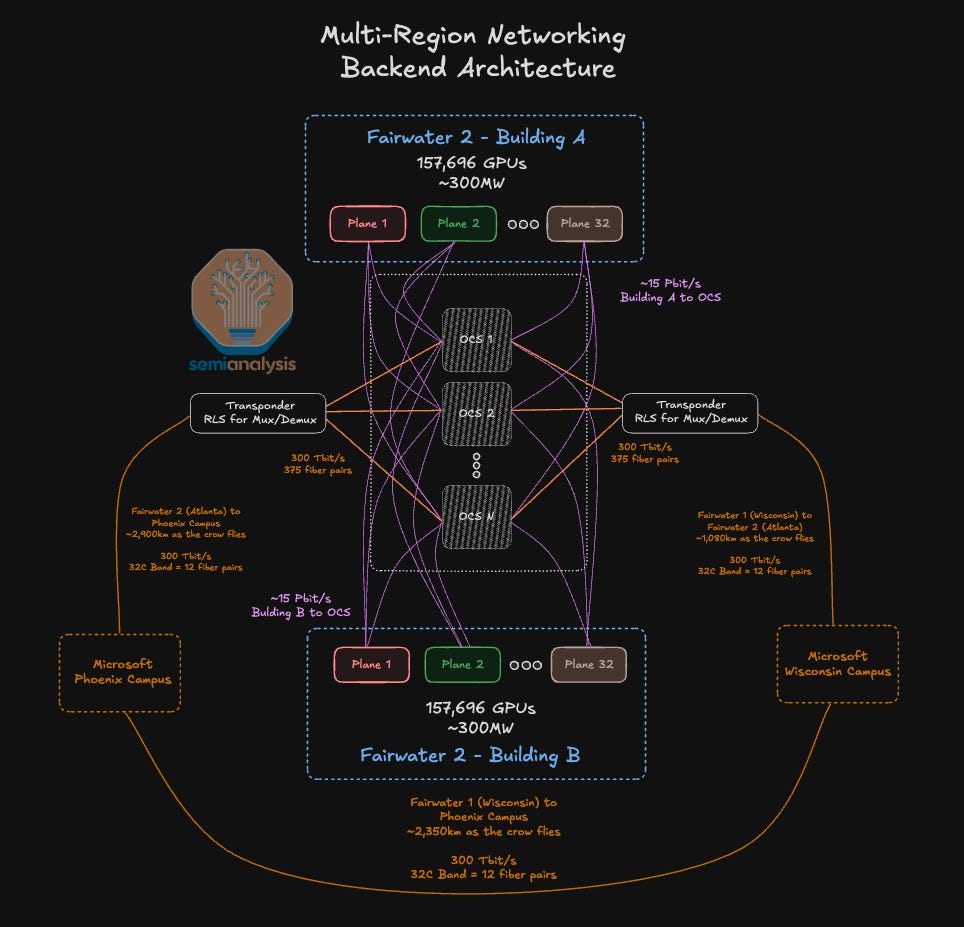
The consequence is that communication requirements grow alongside computational requirements. Every additional unit of compute increases the amount of information that must be transmitted throughout the system. As AI scales, the challenge increasingly shifts from generating intelligence to moving it efficiently.
The Copper Ceiling
For decades, electrical communication over copper has served as the foundation of modern computing infrastructure. While highly effective at short distances, copper becomes increasingly constrained as bandwidth, distance, and power requirements scale. Signal degradation, thermal generation, power consumption, and transmission losses all increase the cost of moving information through electrical systems.
The challenge is not that copper ceases to function. The challenge is that electrical communication becomes progressively more expensive as AI systems scale. Higher bandwidth requires greater power consumption, more sophisticated signal conditioning, and increasingly complex networking infrastructure. As distributed AI clusters grow larger, a rising share of system resources must be devoted simply to moving information rather than processing it.
The root cause is physical. Electrons possess mass and electric charge, causing them to interact continuously with the conductive material through which they travel. As electrical signals move through copper, energy is dissipated as heat due to resistance, signal integrity degrades due to electromagnetic interference, and losses increase with both distance and transmission speed. Maintaining signal quality therefore requires amplifiers, retimers, equalization circuitry, and additional power, all of which increase system complexity and cost.
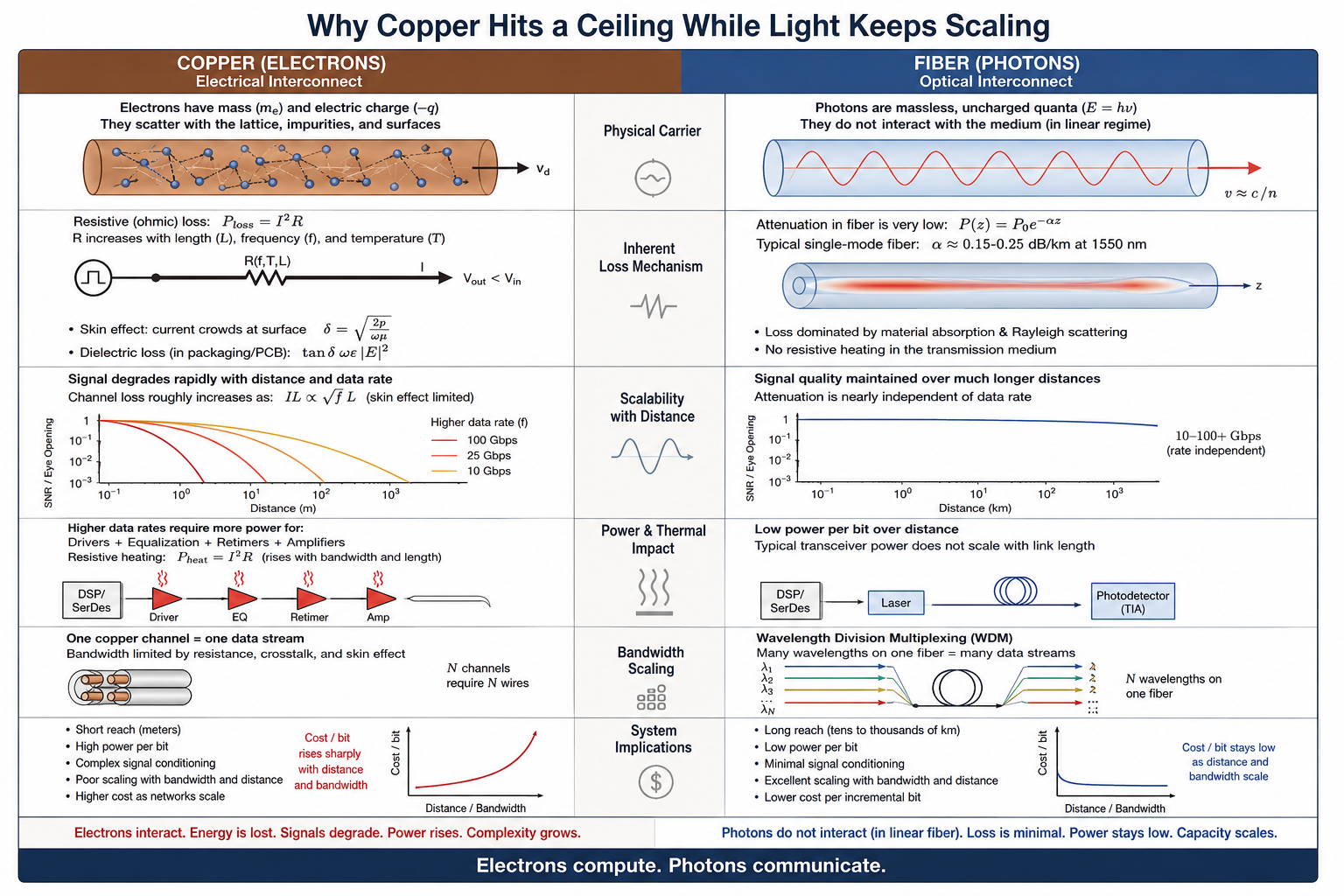
Photons behave differently. Light propagating through optical fiber experiences dramatically lower loss, generates negligible heat within the transmission medium, and is largely immune to electromagnetic interference. More importantly, multiple wavelengths of light can simultaneously occupy the same fiber, allowing bandwidth to scale far beyond what is economically achievable with copper. While electrons remain the ideal medium for computation, they become an increasingly inefficient medium for communication as network scale expands.
These limitations are manageable in localized environments but become increasingly significant in large-scale distributed computing architectures. We believe the industry is approaching a point where communication requirements are growing faster than the efficiency improvements achievable through traditional electrical interconnects. As AI systems become larger, more distributed, and more bandwidth intensive, the economics of moving information increasingly favor photons over electrons. This emerging mismatch represents what we refer to as the Copper Ceiling.
Separation of Computation and Communication as an Inevitability
Historically, computing systems relied upon a single physical medium for both computation and communication. Electrons performed logic operations within processors, stored information within memory, and transmitted information between systems. This architectural symmetry was sufficient when computing systems were relatively localized and communication requirements remained modest.
The emergence of distributed AI systems is beginning to challenge this paradigm. Computation and communication are fundamentally different engineering problems. Computation prioritizes switching speed, logic density, memory locality, and energy-efficient execution of instructions, which is why the industry has gone to extraordinary lengths with chiplets, CoWoS, HBM stacks, interposers, and increasingly elaborate packaging architectures to keep CMOS scaling alive. Communication, by contrast, prioritizes bandwidth, transmission distance, signal integrity, and power efficiency. As AI systems scale across increasingly large networks of accelerators and datacenters, these requirements diverge.
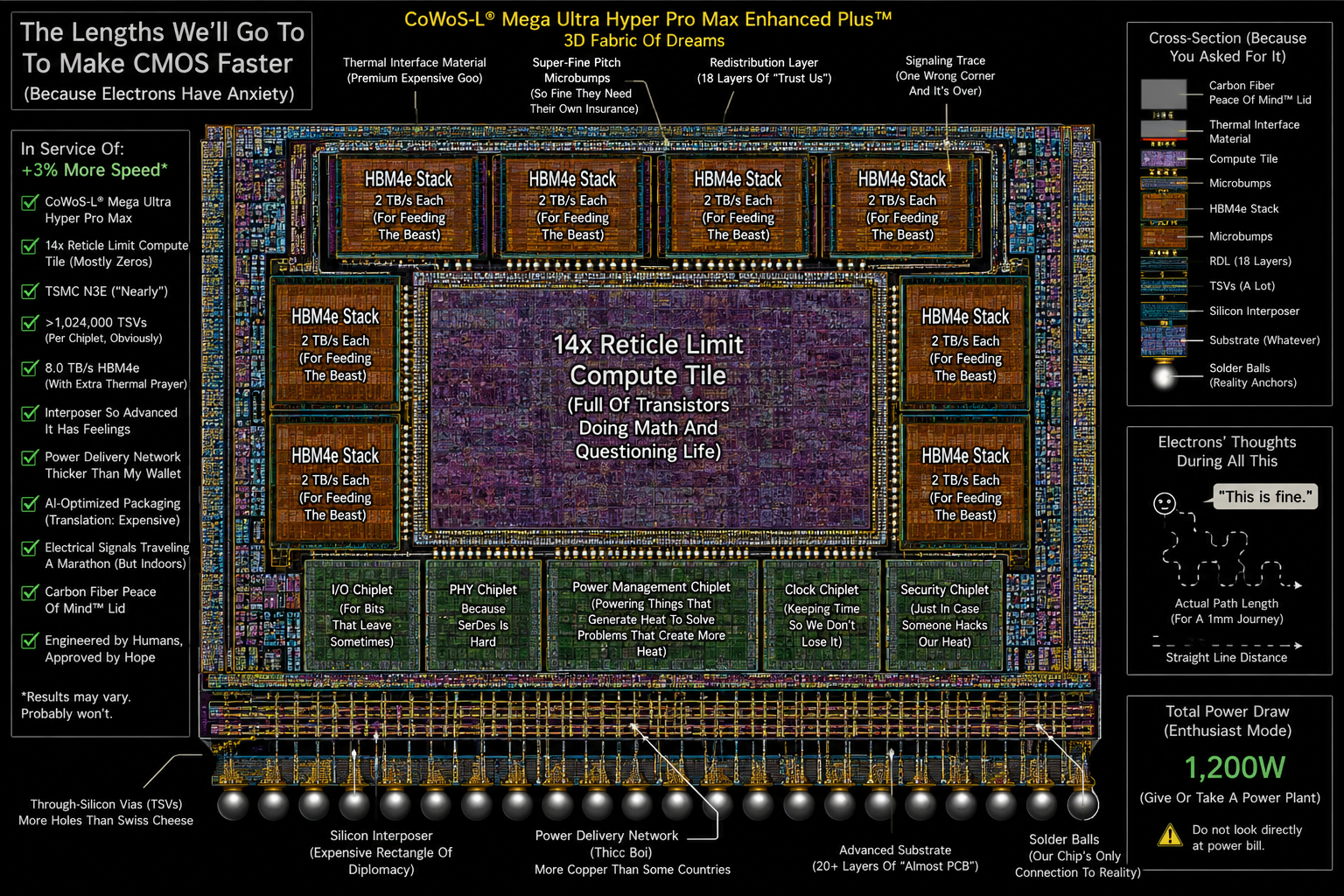
What emerges is a natural specialization between the two mediums: electrons compute, photons communicate. Electrons remain the dominant medium for computation because modern semiconductors are optimized around the manipulation of electrical charge. Photons, by contrast, become increasingly valuable for communication because distributed AI systems require high-bandwidth, low-loss, energy-efficient transmission across longer distances.
We believe this represents a significant architectural transition within AI infrastructure. Just as GPUs emerged because traditional CPUs could no longer efficiently support massively parallel computation, photonics is emerging because traditional electrical interconnects are becoming increasingly inefficient for massively distributed computation. The adoption of optical communication is therefore not merely a networking upgrade, but the consequence of AI evolving into a distributed system.

If Claude Shannon were alive today, he might be pleased to learn that the limiting resource in AI is becoming less computation and more the capacity to reliably move information through a unified computational system. Viewed through this information-theoretic lens, photonics is not the investment thesis. The investment thesis is that AI is forcing a separation between computation and communication. Photonics is simply the physical layer through which that separation is expressed.


Leave a Reply